Michigan Gaming Regulator Quits Problem Gambling Council Over Kalshi Membership
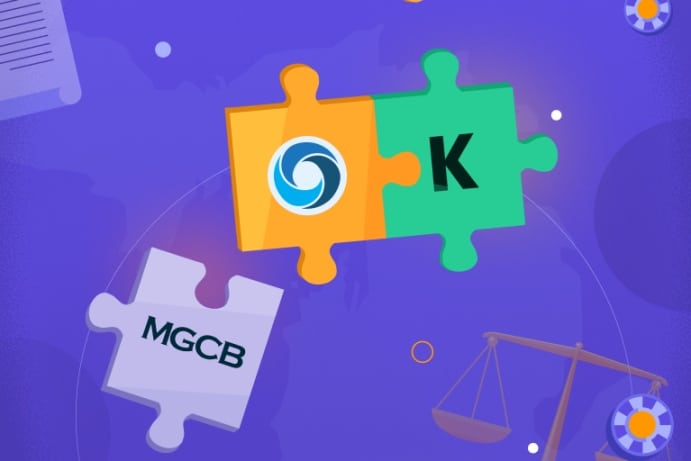
The Michigan Gaming Control Board (MGCB) formally withdrew from the National Council on Problem Gambling (NCPG) on July 1, 2026, citing the nonprofit’s May 2026 partnership with prediction market operator Kalshi.
MGCB Executive Director Henry Williams called the affiliation inconsistent with the regulator’s mission. His letter arrived two days after Michigan won a state-court temporary restraining order (TRO), blocking Kalshi from offering sports event contracts to Michigan residents, and five days after a federal judge remanded the underlying case back to state court following Kalshi’s removal attempt.

Content Manager
Last updated
9 July 2026

Key takeaways
- The MGCB withdrew from NCPG on July 1, 2026. In a letter to NCPG Executive Director Heather L. Maurer, Williams pulled the state’s membership, canceled its paid conference sponsorship, and instructed MGCB employees to step down from all NCPG boards and committees.
- The trigger was NCPG’s May 2026 partnership with Kalshi. The prediction market operator joined as a platinum-level member under a newly created Financial Services & Trading Subcategory, with a $2 million commitment over two years supporting a Financial Trader Health and Safety Initiative.
- The move follows Michigan’s TRO against Kalshi. Ingham County Circuit Court Judge Rosemarie E. Aquilina granted the order on June 29, 2026, blocking Kalshi from offering sports betting contracts to Michigan residents until July 13, with a $120,000 daily fine for non-compliance.
- MGCB canceled its paid sponsorship of NCPG’s July 22-24 conference in Nashville. The National Conference on Gambling Addiction and Responsible Gambling agenda includes sessions on predicting markets and gambling-related harm, including a talk from Ray Cho, project coordinator at the Rutgers Center for Gambling Studies, on the legal definition of gambling in the prediction market era.
- Kalshi joins an NCPG membership roster that already includes major sportsbook operators and sports leagues. DraftKings, FanDuel, MGM Resorts International, MLB, NBA, and NFL are also platinum-level members, putting the prediction market alongside the industry participants state regulators view as its regulated competitors.
How Michigan quit NCPG
In a letter dated July 1, 2026, Williams told Maurer the MGCB could not continue its NCPG membership after Kalshi’s induction. The prediction market operator joined the council on May 18, 2026, with a two-year, $2 million contribution supporting the Financial Trader Health and Safety Initiative, per NCPG’s own announcement.
“Kalshi was actively involved in offering unlicensed sports gambling in Michigan,” Williams wrote, adding that Kalshi may still be doing so, and that the company faces lawsuits from numerous other states. Williams asked NCPG to remove all references to the MGCB’s membership from its website. Those references have since been taken down.
The withdrawal is broader than a membership resignation. MGCB employees will no longer serve on any NCPG board or committee. The regulator also canceled its paid sponsorship for the NCPG Annual Conference, scheduled for July 22 through 24 in Nashville, where sessions on prediction markets and responsible gambling had been programmed months before the Michigan legal battle intensified.
Why Williams objected
Said letter laid out three concerns. First, that NCPG’s affiliation with Kalshi undercuts state enforcement actions and weakens the position of state gaming regulators nationally. Second, that Kalshi’s framing of sports event contracts as investment or insurance products contradicts a fundamental responsible gaming message: that gambling is entertainment, not a means of financial gain.
Third, that association with NCPG could mislead the public about Kalshi’s regulatory status. Kalshi is federally regulated by the Commodity Futures Trading Commission (CFTC), not by state gaming regulators. Michigan’s licensed sportsbook operators must meet requirements that CFTC-registered platforms are not obligated to follow, including MGCB-supervised self-exclusion programs, deposit and wagering limits, and mandatory age verification, per the MGCB’s press release on the TRO.
Williams framed the underlying issue in stark terms in the same release, describing Kalshi’s Michigan offering as “sports betting dressed up as investing.” The MGCB says Michigan’s regulated sports betting revenue directly funds the School Aid Fund, the Compulsive Gaming Prevention Fund, and the First Responder Presumed Coverage Fund, a public-revenue argument the state has used consistently in its Kalshi enforcement posture.
The Kalshi partnership at NCPG
The May 18, 2026 partnership announcement created a new NCPG membership subcategory, Financial Services & Trading, to accommodate the prediction market operator. Kalshi became the first company in the subcategory, joining as a Platinum-level member.
The $2 million contribution is spread across two years and is directed to the Financial Trader Health and Safety Initiative, which NCPG says will develop education and awareness resources for responsible trading across markets that now include prediction markets, cryptocurrencies, options, and leveraged commodity futures. Kalshi also joined NCPG’s Leadership Circle, a designation for major contributors.
The membership deal came as Kalshi has been building out its own consumer protection framework. The company launched a Customer Protection Hub in March 2025 with deposit caps, trading breaks, and voluntary opt-outs. In April 2026, Kalshi became the first prediction market platform to integrate with SelfExclude, a cross-platform self-exclusion system operated by Integrity Compliance 360.
Kalshi joins an NCPG roster that already includes many of the operators state regulators view as its competition. NCPG’s platinum-level members also include MGM Resorts International, DraftKings, FanDuel, and major sports leagues including the MLB, NBA, and NFL, per Yogonet’s coverage of the partnership. The parallel membership put Kalshi in the same responsible gambling infrastructure as the licensed sportsbooks state AGs argue Kalshi is unlawfully competing against.
The Michigan legal battle
The Michigan case has moved forward in recent weeks. Michigan Attorney General Dana Nessel filed the original lawsuit on March 3, 2026 in the Ingham County Circuit Court, alleging Kalshi violated Michigan’s Lawful Sports Betting Act by offering online sports wagers to Michigan residents without a Michigan Gaming Control Board license.
Kalshi attempted to move the case to the US District Court for the Western District of Michigan, arguing federal jurisdiction. The state filed a motion to remand. On June 26, 2026, US District Judge Paul Maloney granted Michigan’s motion, ruling that Kalshi failed to establish federal jurisdiction and sending the case back to state court.
Three days later, on June 29, 2026, Judge Aquilina granted the state’s TRO request, blocking Kalshi’s sports event contracts in Michigan through July 13 and requiring the company to engage a third-party geolocation service licensed by Michigan gaming authorities. Non-compliance carries a $120,000 daily penalty. Aquilina cited potential irreparable harm to Michigan youth in her decision.
Kalshi has said it plans to fight the ruling in court while implementing the temporary geofence. In a statement carried by ReadWrite, the company disagreed with the state’s position and maintained that it is subject to exclusive federal jurisdiction. With Michigan’s ruling, the state joined Nevada as the second US state with a court-mandated prohibition on Kalshi’s sports contracts. A comparable action in Massachusetts remains pending on appeal.
NCPG’s response
NCPG has addressed the Kalshi partnership in prior public statements , taking the position that the council does not advocate for or against the legality of specific gambling products. Its role, the council says, is limited to prevention, education, consumer protection, harm reduction, and access to care.
That neutral posture dates to NCPG’s founding in 1972. Since Kalshi’s May 18, 2026 induction, the group has continued to draw the line between funding relationships and its own policy work, noting that donor contributions do not translate to control over its positions or advocacy.
Cole Wogoman, NCPG’s director of policy and partnerships, put the group’s framing this way in comments carried by Yogonet at the time of the Kalshi announcement: NCPG does not decide whether a particular product or platform meets a legal definition of gambling, but is responsible for understanding where risky behaviors are emerging and ensuring access to prevention resources and support. The council maintains that stance following the MGCB’s withdrawal.
A third front
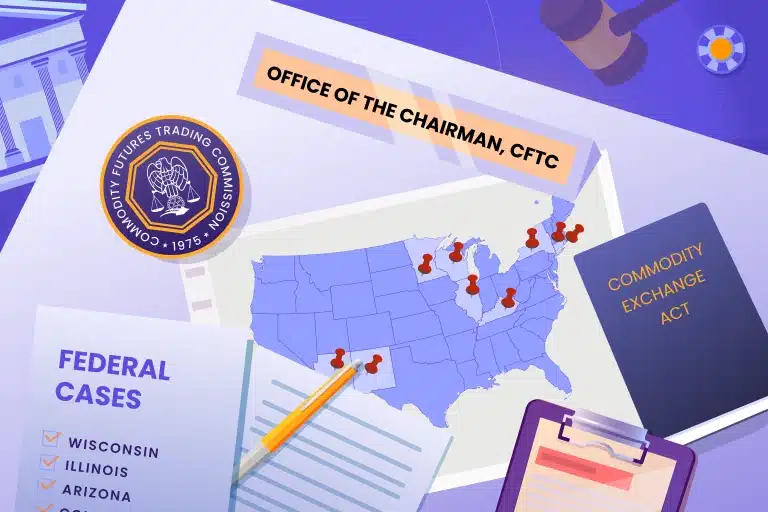
Since March, the Kalshi fight has played out in courtrooms: the CFTC’s nine-state federal preemption campaign, Kentucky’s June state suits against Kalshi, Polymarket, and VGW, and Kalshi’s own federal challenges to state enforcement. Washington has divided predictably. In a May 26, 2026 Truth Social post carried by The Hill, President Donald Trump called it “critically important that the CFTC’s exclusive authority over prediction markets is maintained,” while a group of Senate Democrats led by Richard Blumenthal (D-CT) and Jeff Merkley (D-OR) has pushed the opposite direction at the Senate Appropriations Subcommittee.
NCPG had stayed above that fight, extending its neutrality to Kalshi’s platinum-level membership the same way it does to state regulators, licensed sportsbooks including DraftKings and FanDuel, and the major sports leagues. MGCB’s decision breaks the balance from one side, opening a third front for the industry, distinct from the courtroom and the Washington fight.
Coalition strain was already visible. The American Gaming Association, whose licensed operator members overlap heavily with NCPG’s donor roster, publicly welcomed the Michigan TRO as affirming that sports betting belongs under state and tribal regulation, a position at odds with the neutrality NCPG maintains toward Kalshi. Whether other state gaming regulators facing Kalshi in their own courts follow Michigan’s institutional template, and whether Kalshi’s sportsbook fellow-members eventually reassess their own NCPG positions, are the questions that follow.
What comes next?
The NCPG conference later this month will directly address prediction markets on its agenda. On July 23, Dr. Ray Cho of the Rutgers Center for Gambling Studies is scheduled to present on how legal definitions of gambling apply to predict markets and other gambling-like activities. NCPG’s own session summary states the presentation will call into question the claim that federal CFTC oversight can supplant state gambling law, the very question at the center of Michigan’s dispute with Kalshi. MGCB staff will not attend.
The Michigan legal case continues. Kalshi’s third-party geofence must remain in place through July 13, and further hearings are expected as the underlying state-court complaint moves toward the merits. Kalshi’s public position is unchanged: it operates a federally regulated exchange under CFTC oversight and does not accept state gambling authority over its event contracts.
For Michigan, the withdrawal marks a break with the country’s leading responsible gambling nonprofit at a moment when the state has been leaning heavily into problem gambling awareness. The MGCB’s own “Don’t Regret the Bet” and “Don’t Bet on Your Future” campaigns continue, and the agency’s cease-and-desist enforcement against unlicensed operators has stepped up throughout 2026. The NCPG membership, for now, is not part of that infrastructure.
Sources
Primary
- MGCB Withdrawal Letter to NCPG. Letter dated July 1, 2026, from MGCB Executive Director Henry Williams to NCPG Executive Director Heather L. Maurer, formally withdrawing Michigan’s membership over NCPG’s Kalshi partnership. Full text published by SooLeader .
- NCPG, “Kalshi to Become NCPG’s First Financial Services & Trading Category Member to Advance Trader Health and Safety.” Press release via ncpgambling.org, May 18, 2026, announcing the two-year, $2 million partnership, the new Financial Services & Trading Subcategory, and the Financial Trader Health and Safety Initiative.
- Kalshi newsroom mirror of the NCPG partnership announcement. Post via news.kalshi.com carrying the same May 18, 2026 partnership details from the operator’s side, including the Platinum-level membership designation and the two-year, $2 million commitment.
- MGCB, “Michigan Gaming Control Board reacts to temporary restraining order against KalshiEX.” Michigan.gov press release, June 30, 2026, on the June 29 Ingham County Circuit Court order signed by Judge Rosemarie E. Aquilina.
- Michigan Attorney General, “AG Nessel Secures Order Temporarily Halting Unlawful Kalshi Michigan Operations.” Michigan.gov press release, June 29, 2026, covering the TRO and the June 26 federal remand by Judge Paul Maloney.
- Michigan Attorney General, “AG Nessel Files Lawsuit Against Kalshi for Allegedly Violating the Michigan Lawful Sports Betting Act.” Michigan.gov press release, March 5, 2026, on the original March 3, 2026 filing in Ingham County Circuit Court.
Litigation and regulatory context
- IntergameOnline, “NCPG offers insight into how $2m Kalshi donation will be used” with NCPG’s direct June 2026 statement on the Kalshi partnership, including the council’s neutrality position and the three-pillar allocation of Kalshi’s $2 million contribution.
- ReadWrite coverage of the MGCB decision and Kalshi’s public response to the Michigan TRO.
- Yogonet International coverage of Michigan’s broader enforcement campaign against Kalshi.
- Yogonet, “Kalshi joins National Council on Problem Gambling with $2 million pledge” with details on NCPG’s other platinum-level members, including DraftKings, FanDuel, MGM Resorts International, and the major sports leagues.
- DeFi Rate, “Kalshi Joins NCPG To Advance Prediction Market Responsible Trading Safeguards” on Kalshi’s existing responsible trading framework, including the March 2025 Customer Protection Hub launch and April 2026 SelfExclude integration.
- NCPG conference session page, “Revisiting the Legal Definition of ‘Gambling’ in an Era of Prediction Markets and Other Gambling-Like Activities” with the July 23, 2026 session details and NCPG’s own summary that the presentation will call into question the claim that federal CFTC oversight supplants state gambling law.
- News 10 Lansing (wilx.com) with the American Gaming Association’s public position framing the Michigan TRO as affirmation that sports betting belongs under state and tribal regulation, plus the $120,000 daily fine detail.
Related federal litigation
- CBS News, “Some states want to regulate markets prediction. Should the feds let them?” with the confirmed list of nine states the CFTC has sued (Arizona, Connecticut, Illinois, New York, New Mexico, Minnesota, Rhode Island, Wisconsin, Kentucky) and the AGA’s counter-arguments.
- CFTC, “CFTC Sues Trio of States to Reaffirm its Exclusive Jurisdiction Over Prediction Markets”, April 2, 2026 press release opening the federal enforcement campaign against Arizona, Connecticut, and Illinois.
- Senator Jeff Merkley, “Blumenthal & Merkley Lead Colleagues in Push to End CFTC Assault on State Prediction Markets Oversight”, primary source for the June 2026 letter from 17 Democratic senators to the Senate Appropriations Subcommittee seeking to block CFTC federal funding for state litigation.
- The Hill, “Trump: ‘Critically important’ CFTC has exclusive authority over prediction markets” covering the May 26, 2026 Truth Social post backing the CFTC’s jurisdictional claim.
Industry context
- SweepCasinos coverage, “Michael Selig: From Willkie Farr Partner to Sole CFTC Commissioner,” June 26, 2026. Persona profile of the CFTC Chairman driving the nine-state federal preemption campaign, including detail on the Kentucky filing.
- SweepCasinos coverage, “Kentucky Sues VGW, Kalshi and Polymarket in a Single Day,” June 24, 2026. Coverage of the June 17, 2026 Kentucky enforcement actions that helped shape the current state-federal fight over prediction markets.
- SweepCasinos coverage, “The Sweepstakes-to-Federal Pathway Just Got Its First Graduate,” June 16, 2026. Coverage of ProphetX becoming the first sweepstakes operator to receive CFTC approval as both a Designated Contract Market (DCM) and a Derivatives Clearing Organization (DCO), the federal pathway now depending on the same preemption theory at issue in the Michigan and Kentucky cases.
- SweepCasinos coverage, “Kalshi’s $22 Billion Round Hands Sweepstakes Operators a Spring Reprieve,” May 12, 2026. Coverage of Kalshi’s valuation round and the industry context for the operator’s expanding footprint in sports event contracts.